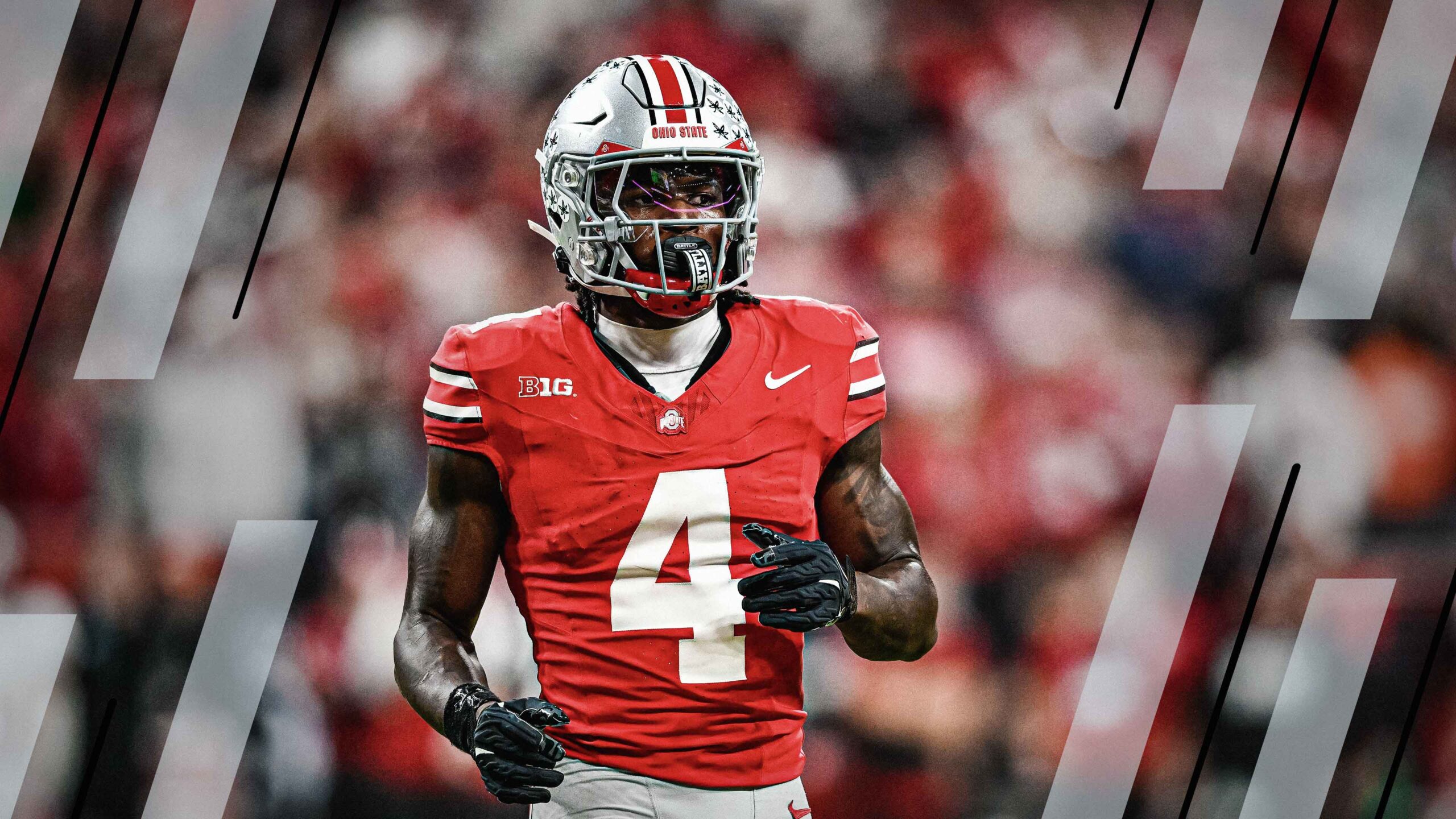
Arch Manning should be the name. For much of the offseason, he was the chalk pick to go first overall in 2027, the quarterback in every mock draft that made its top ten. Then Jeremiah Smith happened.
The Ohio State receiver has been so dominant in the first six weeks of the season that he has turned the entire conversation upside down. Jordan Reid’s top-50 ranking for 2027 has Smith sitting at No. 1, ahead of Manning, ahead of every quarterback in the class. That’s no small thing. Wide receivers are almost universally outclassed. It happened exactly once during the regular draft, when the Buccaneers took Keyshawn Johnson in 1996, though many GMs will tell you the pick still haunts their draft rooms.
So why is this happening a full year before the draft? Because the draft order is no longer just a scouting conversation. It is a market. And the markets move on the buzz long before anyone’s actual pick order is set.
How the Draft Order Markets One Year Ahead
This is the part that casual fans miss. Once a name like Smith starts trending, odds boards for “who goes No. 1 overall” start forming around him, sometimes before his dominant college season is even over. These are not just betting lines for entertainment. They’re a real pricing mechanism, reacting to film, to injury news, to the needs of the team six months away from being finalized.
Think how fast it moves. Smith wasn’t even the consensus top receiver in his own conference two years ago. Now he’s priced ahead of a Manning, a name with more hype behind it than almost any quarterback prospect since Trevor Lawrence. That kind of swing only happens because someone, somewhere, is actively pricing in uncertainty in real time.
Fans who want to track these changes as they happen, rather than wait for the next mock draft update, typically turn to trusted offshore betting sites, where futures boards post draft-order and award-race odds months before the actual event. The thing is that the bet itself is not much like information. A line that moves two points a week tells you something: a ranking update, which is updated once every two weeks, is not really feasible.
Why Jeremiah Smith Is in This Conversation
Go back to last year and no one is debating whether a receiver could be the top pick in next year’s draft. That conversation doesn’t exist. Smith forced it by being, frankly, a different kind of prospect than Ohio State has done in years. He already has the size teams covet at 6-foot-3, the route-running polish teams typically wait two seasons in college to see, and a catch radius that has drawn constant comparisons to the best receivers of the last decade.
PFF’s early mock draft work has him going to the Titans first, which tells you that analytics-driven boards and buzz-driven boards are starting to converge. That’s remarkable. Usually the scouting community and the betting market take longer to sync. When Fox Sports ran its own mock a few weeks later and also put Smith first, with Manning being the only quarterback off the board, the signal became harder to ignore as noise.
Not everyone is convinced, and that skepticism is also important. The Pro Football Network ran a piece with an ESPN analyst outright rejecting the idea that a receiver, any receiver, could realistically go No. 1 in a class with this much quarterback talent. The subordinate point beneath all this: the analyst’s objection, centered on positional value rather than Smith’s actual tape, is exactly the kind of disagreement that keeps futures markets interesting rather than orderly.
The Draft Order Is Not the Only Price
Not only the No. 1 overall slot moves. The entire draft order board is reshuffled weekly based on who wins and who doesn’t. Yahoo Sports tracks the entire expected first round against the live NFL standings, and the picture looks nothing like it did in September. Teams expected to draft in the top five are suddenly in the middle of the round. Teams without anyone in the top ten are now sitting in prime position.
That’s the part that serious draftniks need to internalize. A mock draft from early October is out of date by Halloween. The order is not fixed. It’s reactive, almost alive, changing every Sunday based on who wins and who gets blown up.
By midseason last year, the final top five picks were almost nothing like where the preseason power rankings placed those franchises, so anyone who treats the August mock as gospel in November is doing so out of date.
What This Means If You’re Tracking the 2027 Class
If you’re building a mental big board around names like Smith, Manning, or any of those rising in the weekly reports from the SEC and Big Ten, understand that the order you’re describing right now is tentative. It will be different through Thanksgiving. It will be different again during bowl season. The only constant is that the names that generate the most buzz, win or lose, tend to be the fastest moving up the boards, whether those boards are scouting-based or market-based.
Smith’s rise from preseason afterthought to No. 1 talk to the actual favorite in almost six weeks is the cleanest example of this in recent memory. This is not the last in this cycle.
FAQ
Is Jeremiah Smith really going to be the No. 1 pick in 2027? No one can say this for sure in advance. Smith is currently the favorite on some early boards and in PFF’s mock draft, but a full season of tape, combined testing, and the team still needs to play before anything is even remotely close.
Why would wide receivers go first overall over quarterbacks? It is rare but not unheard of. Occasionally, teams prioritize a true difference-maker at receiver over a quarterback prospect they consider unproven, especially if their current passer is under contract and performing.
How often do early draft order predictions change before the actual draft? Keep going. The standings fluctuate every week during the season, and the team needs to change based on injuries, coaching changes, and late-season form. The gap between a Week 6 projection and the actual April sequence is usually significant.
What is the difference between a mock draft and a future order draft? A mock draft is an analyst’s prediction of who a team will select. A future draft order is based solely on projected win totals and standings, independent of who the team may actually select.
The Bottom Line on the Early 2027 Buzz
Treat every ranking, mock, and projected order today as a snapshot, not a prediction. Smith’s rise says more about how quickly perception can change in this sport than where he will actually be drafted. The names to watch aren’t the only ones at the top right now. They are the ones capable of moving that quickly before next April.

NFL Draft Diamonds was created to help the underdogs who play the sport. We call them diamonds in the rough. My name is Damond Talbot, I have worked hard to help hundreds of small school players over the past few years, and I will continue my mission. We have several contributors to this site, and if they contribute their name and contact will be in the piece above. You can email me at nfldraftdiamonds@gmail.com