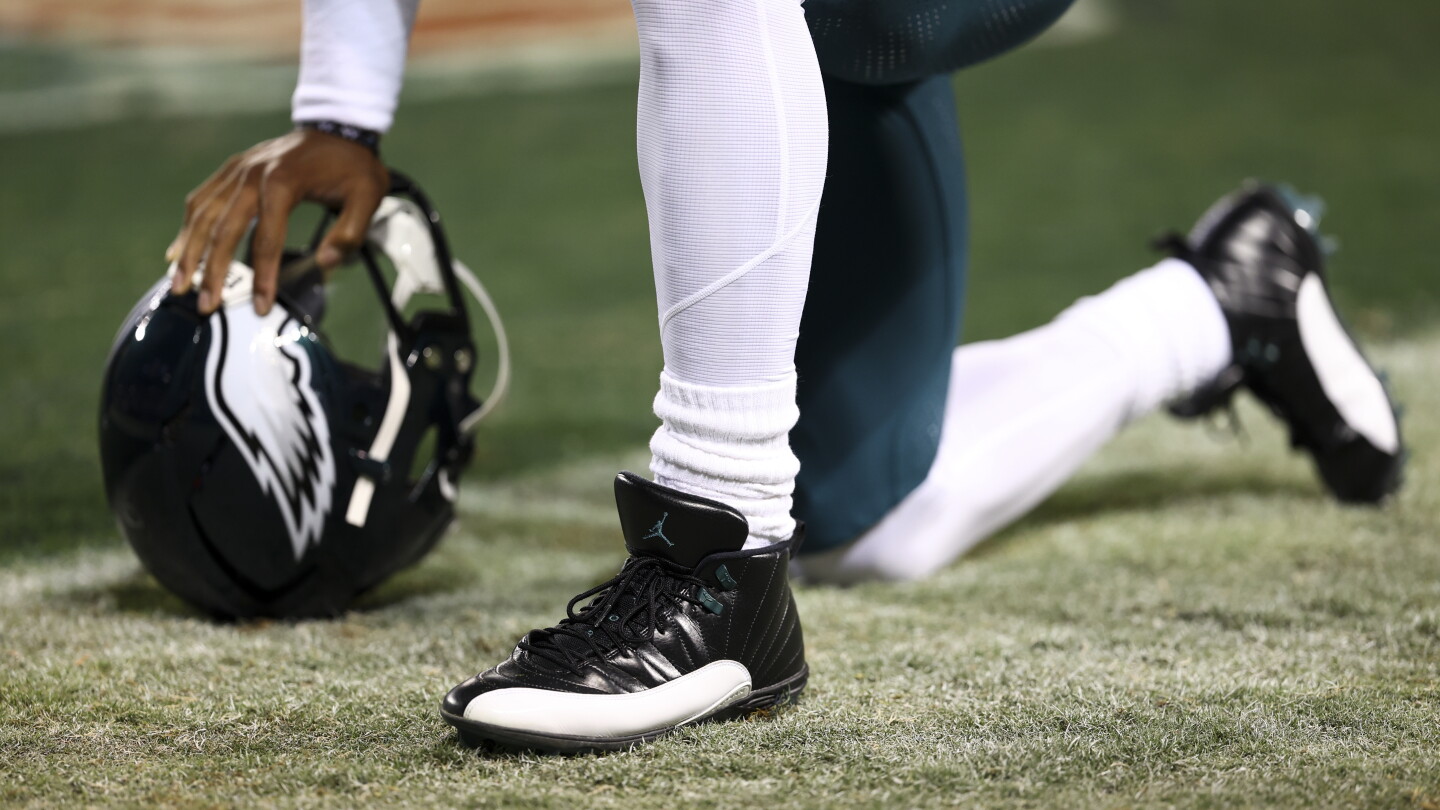
Given the ongoing developments in the Jalen Hurts situation, it’s understandable that reporters covering the team have questions. With only Eagles coach Nick Sirianni available to speak to reporters on Monday, he was obviously the one to be asked those questions.
As his comments at Monday’s press conference showed, Sirianni is not fully committed to providing the kind of transparency and details that journalists expect.
But Sirianni made a comment, in passing, that highlights a deeper problem that still lingers within NFL organizations, years after the league was forced by Congress to take head trauma seriously by involving unaffiliated physicians to decide when a player should be allowed to play after suffering a concussion. Too many teams, and the doctors they employ, view the job not as treating players as patients but as a vehicle for checking the boxes necessary to allow a player to play.
Here’s what Sirianni said, when asked to identify the people who were part of the conversations surrounding the medical decisions made after the blood clot was discovered in Hurts’ leg: “I guess I would say this, the same doctors and trainers who helped 21 of our 22 starters. be available at the Super Bowl are the same men today who care enough about our people to help them.” (Emphasis added.)
Doctors should not be there to help players “be available.” They should be there to provide medical care to players who, when they have a health issue, become patients. Without an unrelated doctor involved in the process, the goal can easily shift from getting the best patient care to best enhancing the player’s ability to play.
That is why the Hurts case should be the starting point for a comprehensive review of the entire system of providing medical care to NFL players. Because it’s the player who wants to play and the team the player wants to play for, a doctor who is perceived as too often saying “this player shouldn’t play” risks being replaced by a doctor who understands the unspoken (usually) goal of making sure as many players as possible are “available” to play in every game.
As the Eagles continue to stumble through the aftermath of an incident that features a growing list of head-scratching decisions, the only way it makes sense is to view the entire exercise as an effort not to give Jalen Hurts the best possible medical care but to allow the player and the team to achieve the shared goal of making sure he’s “available” to play.
With Hurts, the immediate reaction to discovering the blood clot seemed to be about doing whatever needed to be done to allow him to play. Even if it means advising him not to sleep as a precaution.
An unexplained wrinkle led to more confusion, with Netflix’s Tom Pelissero tweaking his report that Hurts was told not to sleep and didn’t in It really hurts to sleepat least a little, in the stadium before the game.
All of the evidence made publicly available creates the impression that Hurts blood clot was not viewed as a medical emergency for the patient but as an availability emergency for the player and the team.
“What do we need to do to make sure he’s available?” the question shouldn’t be. It should be, “What do we need to do to protect this player?,” with his availability being a secondary concern, for the most part.
Consider the still unanswered question of why Hurts was allowed to fly across the Atlantic Ocean despite having a diagnosed blood clot in his leg, less than three days after flying across the Atlantic Ocean with an undiagnosed blood clot in his leg. It seems the concern isn’t making sure Jalen Hurts doesn’t have an increased risk of further issues, but keeping the door open to Jalen Hurts being able to play Sunday against the Panthers, and beyond.
This is an important issue that should not be ignored simply because Hurts avoids the worst possible outcome of pulmonary embolism. The league and its teams should view the matter as a wakeup call about the continued culture of using doctors not as resources for patient care but as tools for player availability.