The Seattle Seahawks offense stinks. Never mind the points scored, which don’t accurately reflect the underlying statistics, the Seahawks offense is bad. It could cost them a playoff berth, and it almost cost them the NFC West title barring some humongous San Francisco 49ers collapse.
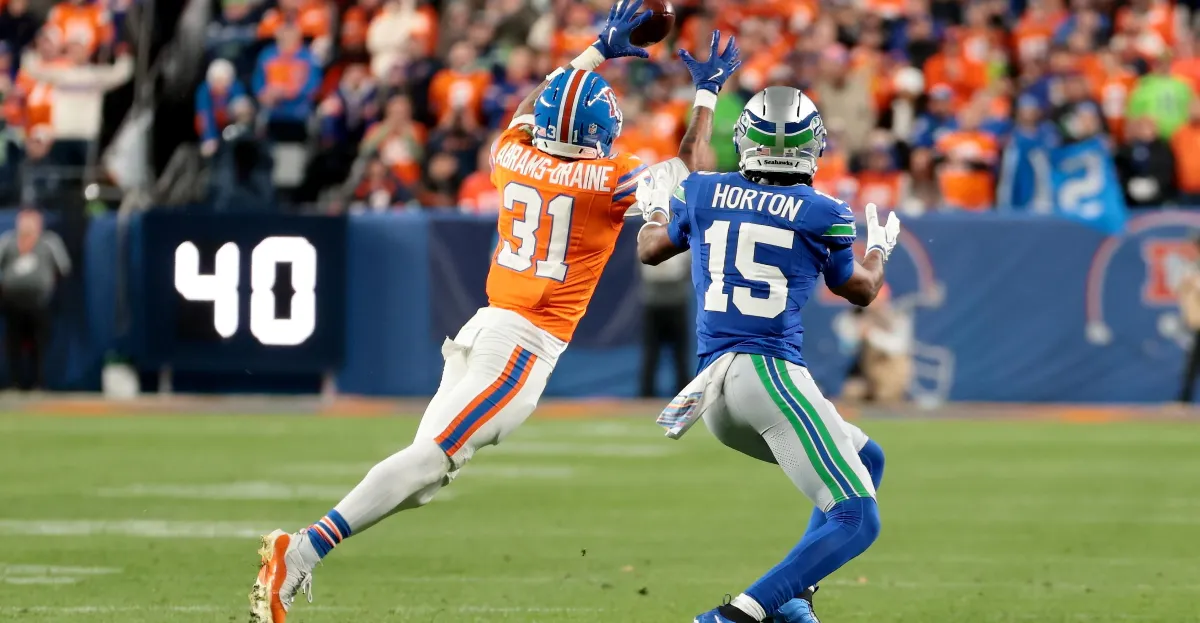
Seattle is 3-3 after a brutal 17-14 overtime loss to the Denver Broncos. The Seahawks’ three losses were by a combined eight points, but the turnover margin in those games was a combined -7. It won’t end. Sam Darnold has played poorly enough to justify talk of benching him. The running game is both bumpy and an absolute mess. If not for Jaxon Smith-Njigba, the Seahawks would look like an offense befitting their 1990s comebacks, as Seattle’s offense for much of the early 1990s was an impossible watch.
New offensive coordinator Brian Fleury is taking a lot of heat for the way this unit has cratered come Super Bowl season. I’m not going to excuse Fleury whatsoever for this wild offensive slide, but I think there’s something bigger at play coming off the tail-end of last season under Klint Kubiak.
The warning signs for the Seahawks offense were there last year
For those of you who are new to the Field Gulls and/or don’t remember, I wrote a big article before the season finale against the San Francisco 49ers. Seattle has won six games in a row but the high-flying, high-scoring offense from the first half of the season has fallen dramatically short of wins. I’m not going to quote myself in huge blocks and make this article longer than it needs to be, so here are the CliffNotes (MookNotes?) of what I observed at the time:
- The passing game has clearly decreased in efficiency from the Los Angeles Rams loss forward. The run game has improved, which is a relief, but Sam Darnold’s hot start has cooled dramatically and it was more than a four-interception disaster against LA. His sack rate was worse if you took out the Rams game, actually. They were also a more explosive offense before the loss to the Rams.
- Teams started to beat Sam Darnold more and stack the box less. Four of the six highest rate blitzes Darnold faced were from Week 11 onward, most notably the onslaught from the Minnesota Vikings by Brian Flores. Even the Carolina Panthers blitzed on more than half of Darnold’s dropbacks. Darnold was one of the most popular QBs at the time (and generally performed well), but teams were sending the heat more often. In terms of stacked boxes (8+ defenders in the box), the Seahawks went from facing stacked boxes north of 35 percent of the time to nearly 30. Opposing teams stopped worrying about the run game and wanted Sam Darnold to beat them.
- Sam Darnold’s weaknesses are exposed in pure dropback situations. When Sam was rocking it, the Seahawks were the best play-action passing team in the NFL. Put him somewhere with no play-action and things get worse. At the time of last year’s article, Darnold was 23rd in EPA/dropbacks on non-PA throws, with most of his interceptions coming in those situations.
- Seattle scored a lot of points by living on the short field. The Seahawks still score at a healthy clip in part because they get defensive and special teams touchdowns, as well as really short fields that the offense can’t break. They led the NFL in touchdown drives starting at midfield or better from Week 12 forward. From Weeks 1-11, the Seahawks scored touchdowns on about 25% of their drives when started inside their own 30. They scored touchdowns about 10% of the time from Week 11 forward, which ranks 28th.
- The running game has shown signs of improvement. Rushing EPA is significantly better while the success rate is moderately better. Seattle’s passing game has declined significantly but the rushing attack has found some juice as the season has progressed. A good sign for how they ended up performing in the Super Bowl.
My friend Griff (cmikesspinmove on Twitter and BlueSky, one half of the Seattle Overload podcast), provided more insight on how flat the passing offense has been especially after Darnold’s hot start.
Things got even worse for the Seahawks in 2026
- The Seahawks offense isn’t good at almost anything right now even though Jaxon Smith-Njigba is having a dominant season. They are 25th in EPA/play, 18th in EPA/pass (almost certainly helped by Drew Lock’s showing against the Arizona Cardinals), 31st in EPA/rush, 9th in sack rate, 16th in net yards/attempt, 28th in third-down conversion rate, 18th in yards to 16 touchdown rate, and 16 touchdowns in the red zone.
- Sam Darnold plays like a bad quarterback on play-action or dropback. Darnold is 24th in EPA/play-action passes, hampered by his three interceptions and no touchdown passes, and 25th in EPA/dropbacks on non-PA throws, just behind Bo Nix. So nothing works for Darnold and his turnovers are absolute game-sinkers.
- Defenses are stacking the box even lower than last year and Seattle can’t take advantage. While fully acknowledging the injuries to Jadarian Price and Zach Charbonnet, Seattle can’t run the ball explosively. The stacked box rate is 23.6%, 15th in the NFL and nine percentage points lower than 2025. The Seahawks rank 25th in EPA/rush against light boxes, and their yards after contact in light boxes is 19th after being 11th in 2025. In the past two games, the Seahawks faced the back stack15 and the Seahawks faced in the back stack15 box. zero explosive runs against the San Francisco 49ers and three against the Broncos.
- Yes, Sam Darnold is still very confused, and he is literally the worst QB when pressured. Darnold was blitzed on nearly 37% of his dropbacks, fifth-highest rate in the NFL. Last year it was 34.8%, so it’s already high and now it’s even higher. When he’s pressured, he’s essentially a non-functioning quarterback. This is his EPA/dropback. dead last

Note that Darnold was 30th in the same statistic last year, so this is a two-year trend of the same problem. When he’s under duress he’s at his worst, and the offensive scheme and pass protection only exacerbate his chronic weakness.
- The Seahawks still can’t consistently score touchdowns without reasonably good field position. Seattle now has 40 drives at or inside its own 30-yard line this season. Only five of those have been touchdowns, which ranks 26th (via Stathead). Their touchdown drives in this ugly three-game stretch have traveled 23, 65, 20, 68, 24, 23, and 67 yards. The average length of their TD drives from Week 4 forward is 41 yards. When Drew Lock started against the Cardinals, they had 86-, 80-, and 70-yard touchdown drives, while Darnold had 90- and 80-yard TD possessions against the Washington Commanders. that’s all. But the pattern from late last year has bled into this year: Seattle’s offense stalls when it doesn’t effectively start possessions a few first downs away from field goal range. You can’t live like that.
- The running game is terrible. I’ve given some stats earlier in this section, but when Kenneth Walker III and Zach Charbonnet caught fire (until his injury) it saved the offense. That’s not happening with Emanuel Wilson and George Holani. So if the passing game’s structure is broken and there’s no running game as a fallback option, you’re screwed.
- We have to be honest with how well Klint Kubiak protects this offensive line. Hawkblogger had a great question and stats about Seattle’s maximum usage protection. Last year they were first, this year (prior to last night) they were 27th. That means more responsibility belongs to the offensive line than previously assigned.
This offensive line is not performing well and I don’t think Fleury is helping with his play-calling. Perhaps the most disappointing thing for Seattle outside of Darnold’s slump is that this o-line may not be as good as expected. It doesn’t all fall on Darnold when seasoned veterans like Abe Lucas are put in Nik Bonitto’s spin cycle, or the interior is overwhelmed by superior defensive tackles.
It’s easy and simple, “Run what Kubiak ran last year!” and that’s how you change the offense. But Klint is no longer here, and there are clear signs that Kubiak’s offense will hit a few walls before finding an opening to success with the rushing attack. If nothing else, Kubiak knows what concepts Sam likes and executes, and those two put together a masterclass in the NFC Championship. I’m not sure if the same applies for Fleury.
There’s a cynical part of me that believes Kubiak maximized what he could to turn Sam into a functioning quarterback, and that there really is no way for Sam to progress as a starter given his long-standing weak spots in pure dropback situations. With non-elite quarterbacks, there are only so many levers you can pull before competent defenses respond. Another part of me believes that Brian Fleury’s offense doesn’t help Darnold (or, really, even his offensive line) nearly enough to put him in better positions to succeed and become more like the QB we saw in 2024 and 2025.
Either way, since last year’s homestretch, we’ve had nearly an entire season’s worth of passing offenses that weren’t particularly sharp outside of JSN, and opposing defenses have largely figured out how to turn off the play-action money machine and now they have no reason to respect the run until further notice. Blitz Darnold, pressure Darnold, and you might as well live with JSN feasting if it means no other records get made. Seattle needs answers fast, or else this season will be a bust and cause a significant rethink of this offense heading into next offseason.