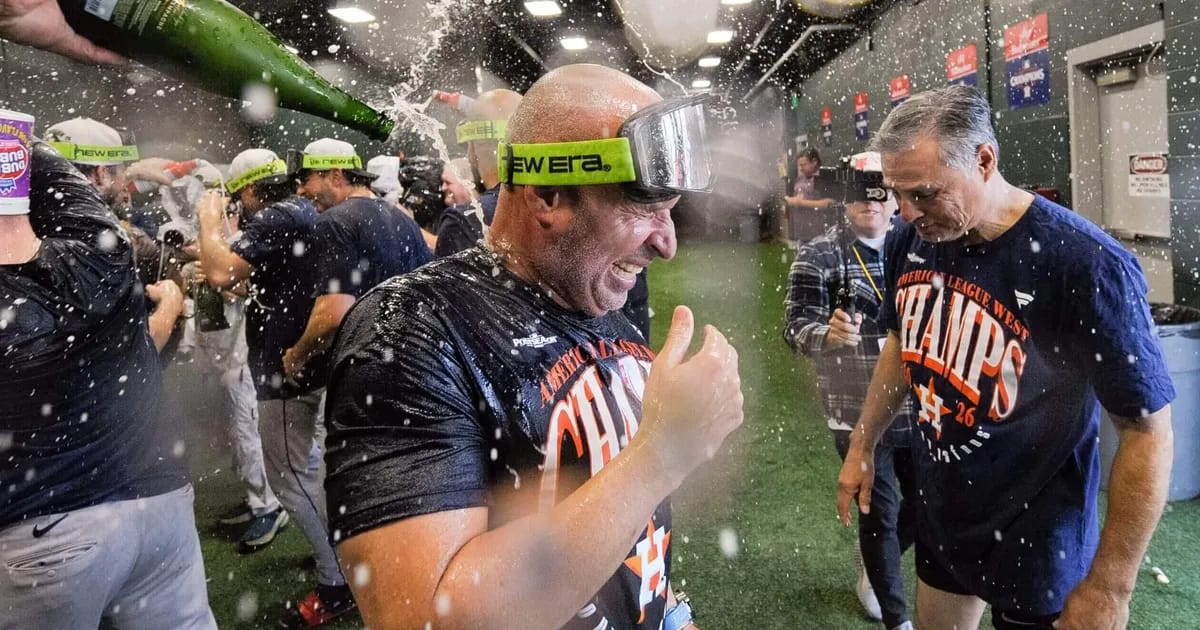
The Houston Astros just finished a season so mediocre it deserves a plaque in Cooperstown’s hall of shrugs. They won by 81. They lost by 81. They were outscored by 41 runs. It was a time without a pulse, but it was still alive.
Their reward for the ordinary is a division title, a playoff berth and, because irony has a sense of humor, home-field advantage in their first-round series with the Chicago White Sox that begins Tuesday night.
Houston is now the first team to reach baseball’s postseason without a winning record for an entire season. The Astros finished 17 games behind Tampa Bay and 13 behind the Yankees. They earned the privilege by being the least bad team in the worst division in the sport.
Go ahead and giggle. It’s funny. And go ahead and focus your frustration on baseball’s playoff format. But the Astros are a reflection of where American sports have been drifting for years, first slowly and then all at once. The postseason in most sports has become a market for mediocrity.
Every major leaguer seems to have come to the same quiet conclusion. Hope is more important to sell than efficiency.
The NFL expanded its playoff field from 12 teams to 14, and, at this point, would it really surprise anyone if they eventually reached 16 – exactly half the league? The NBA invented the Play-In tournament and got 20 of its 30 franchises into at least the postseason lobby. Major League Baseball, which 33 years ago allowed only four teams in its prestigious postseason, is now up to 12 playoff teams. College football recently jumped from four to 12.
Each expansion came with its own sales pitch, and the vocabulary didn’t really change. Access, meaningful games, more markets and more fairness. Some of it is sincere, and some may even be true.
The truth is that it also builds television inventory and allows more franchises to say, “We’re still alive.” There is nothing more profitable in sports than a chip and a seat for a fan base.
The Carolina Panthers lost their regular season finale at Seattle, 27-10, on Dec. 28 to finish 8-9 in the NFC South. That was good enough for the division crown and a home playoff game. (Jim Dedmon/Imagn Images)
Before last season, four NFL teams reached the playoffs with losing records in non-strike seasons. Then, Carolina went 8-9, won the NFC South and hosted an 11-win Rams team in January. The Panthers lost a thriller, 34-31, but they still managed to play their final regular-season weekend with something truly at stake.
That kind of value keeps fans in stadium seats and on their couches. This keeps local ratings breathing. It keeps coaches from resting starters and the front office from admitting out loud that they’re already thinking about the offseason. Often, it keeps an entire city emotionally invested in a team that, by any honest measure, hasn’t done enough to deserve it.
The NBA took that idea and expanded on it.
In the relatively new play-in tournament, finishing 10th in a 15-team conference still buys a ticket to some purgatory version of postseason basketball. Twenty teams finish in a playoff or play-in spot each year now. That is two-thirds of the league with a gate to pass through, however narrow.
Before play-in, the gap between the eighth and 10th seeds is the difference between a playoff series and a tee time. Now the 10th place is selling tickets.
In 2025, the Miami Heat became the first 10th seed to survive the play-in and reach the true playoffs. Suddenly 37-45 came with a lifeline instead of a eulogy.
College football learned the same lesson. For generations, one loss could ruin a season, and two almost always happened. Former Ohio State athletic director Andy Geiger was adamantly against a playoff 25 years ago because he wanted to protect the sanctity of the regular season. He once told me that the regular season in college football is more important than any other sport and he wants to keep it that way.
Current OSU athletic director Ross Bjork is on the complete opposite side.
“Nobody can argue that. What’s wrong with higher level football?” Bjork told Front Office Sports. “What’s wrong with more postseason content? What’s wrong with keeping the postseason alive for as many teams as possible?”
And there it is.
More hope means more income for everyone.
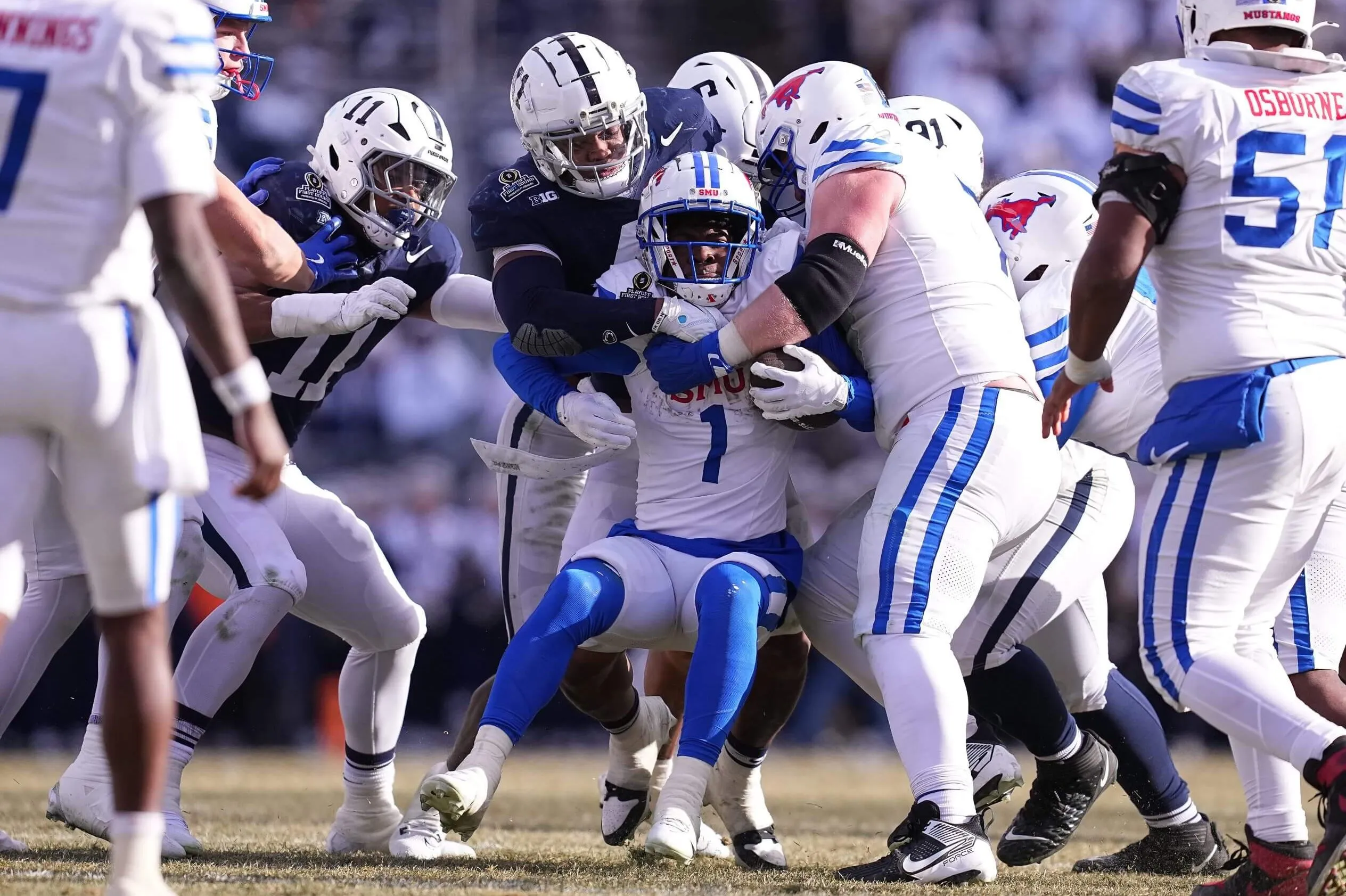
The 12-team College Football Playoff rewrote the math and gave us an inaugural first round of blowouts, including Penn State’s 38-10 drubbing of SMU. (Mitchell Leff/Getty Images)
The 12-team playoffs rewrote the math and gave us an inaugural first round of blowouts. Penn State beats SMU, 38-10; Texas held off Clemson, 38-24, and Ohio State destroyed Tennessee, 42-17. The quick reaction is to assume that some of those groups don’t belong.
But expansion isn’t really about finding 12 teams capable of winning a national title. Probably not 12. Some years, maybe less than six. The point is to do the chasing of 20 or 25 programs deep in November.
No one understands this better than the NFL. The league doesn’t need 14 Super Bowl-caliber teams in January. It takes enough doors to stay open that 20 teams believe they can walk one of them, which brings it back to baseball and its purest expression of the idea. The Astros have given up more runs than they have scored this season. But because divisions still carry weight, the Astros earned an October invite that better teams missed.
Maybe that offends your sense of competitive justice. But leagues don’t just create postseasons to crown the best now. They build regular seasons to keep most teams relevant for the longest time possible.
Check out what baseball got up to over the weekend. Houston and Texas tied Game 162 at 80-81. Not even a wild card out of reach. One will win the AL West and host a playoff series. One is on his way home. For all the jokes about an 81-win division champion, MLB got the high drama it wanted. Baseball matters on the last day of the six-month season.
We can complain when an 81-81 baseball team or an 8-9 football team is rewarded. We might ask why a 10th-place NBA team still has a heartbeat, or whether the 12th-best college football team has any business playing for a championship.
But “worthy” is fading from the conversation. The leagues have found something more profitable than rewarding greatness. They learned how to sell a possibility.
A good team can attract a city. Hope can hold 20 of them captive and make every one of them grateful for it.