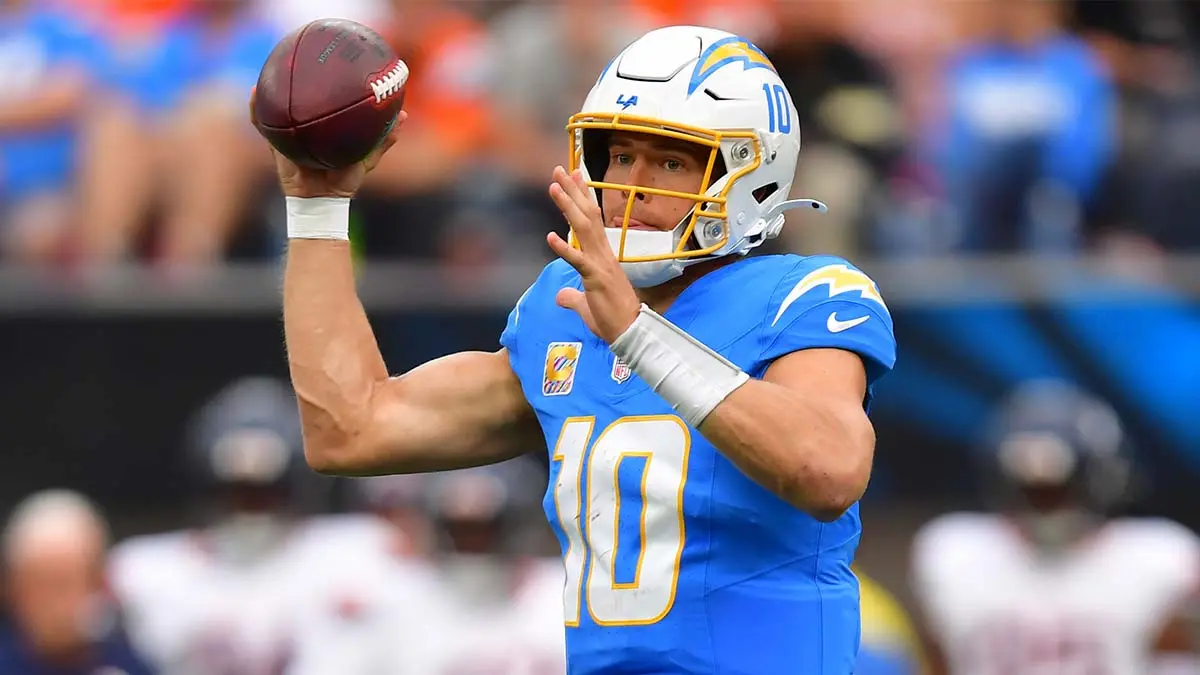
Los Angeles could use the trade deadline to add younger talent while preparing the roster for changes beyond a disappointing 2026 season.
The Los Angeles Chargers have emerged as one of the most intriguing teams to keep an eye on as the November 10 trade deadline approaches. Their 0-5 start has fueled speculation about Khalil Mack, whose expiring contract has made him appealing to contenders in need of pass-rush help. In addition, Quentin Johnston has also been mentioned as a potential trade candidate after an inconsistent start to his fourth season.
While selling veterans may be part of the team’s strategy, the trade deadline doesn’t have to serve solely as an opportunity to acquire future draft picks. Los Angeles still boasts Justin Herbert, who is in his prime, as well as Omarion Hampton, who is just starting his career, and several defensive players who could contribute beyond this season. This situation gives general manager Joe Hortiz reason to look for younger players who have been costly to other teams.
Injuries along the offensive line make it important, as Rashawn Slater missed time with an ankle injury, Joe Alt was sidelined with a neck issue, and the Chargers had to deepen their tackle depth. The secondary has also suffered multiple injuries, indicating another area where a younger addition could thrive amid potential postseason changes.
Three players fit into a trade strategy that focuses on both the remainder of the 2026 season and the long-term outlook through 2027.
Blake Fisher could be part of the solution around Justin Herbert
Houston’s offensive line reshuffling has put Blake Fisher in an unexpected position for a former second-round pick who already has significant starting experience. The Texans selected Fisher 59th overall in the 2024 draft, and he started 15 games in his first two NFL seasons, moving between the tackle positions. However, this year, his role has changed dramatically; the 23-year-old played in each of Houston’s first five games but did not make a single start.
This situation creates an interesting opportunity for Los Angeles, and they’ve spent the past two seasons learning how damaging offensive instability can be for quarterback Justin Herbert. Rashawn Slater missed the entire 2025 season before returning this year, while Storm Norton also lost last season to injury. Both tackles will be unavailable in the current campaign, forcing Jim Harbaugh’s coaching staff to rely on less experienced combinations than the offense it was designed to support.
If the Chargers land Fisher, he would provide more significant long-term value than simply signing another veteran as a temporary fill-in. His previous starting experience means Mike McDaniel’s offense will get a player capable of contributing right away. Additionally, his age and rookie contract will allow Los Angeles to continue building him after injured starters return. So, a healthy Slater and Norton would ideally serve as the team’s primary tackle duo, with Fisher positioned as a swing tackle.
Brandon Stephens would give the secondary a more solid long-term option
The Chargers’ defensive backfield started the season with enough talent to support Chris O’Leary’s defensive strategy, but injuries continued to disrupt the planned rotation. Derwin James Jr. has missed time, Donte Jackson is dealing with a hamstring injury, and the cornerback combinations around Tarheeb Still and Cam Hart have changed frequently due to varying availability. Additionally, Jackson’s name has come up in trade speculation, which could create a bigger gap before the November deadline.
Brandon Stephens shows a way to make the position younger without having to wait for free agency. The Jets cornerback played some of his best football this season and is under contract through at least 2026, giving whoever acquires the team more than a short-term rental. New York invested heavily in its secondary during the offseason and has younger players developing behind Stephens, making him a viable candidate in trade discussions around the league.
His experience in man coverage fits a Chargers defense that values flexibility in the backfield. At 6-foot-1, Stephens has the size to handle perimeter assignments, and his ability to play physical coverage will give O’Leary another option to shore up a defense that could look very different after the trade deadline. Making this move will become more attractive as Los Angeles begins to review its veteran contracts. Trading an older cornerback for a younger player with years of control would allow the Chargers to move their roster effectively, instead of just stockpiling draft picks and postponing decisions until March.
While Stephens should be worth more than a late-round pick, as his current team is under no obligation to trade him, Los Angeles has enough future needs in the secondary to warrant exploring a deal that provides value beyond this season.
Christian Haynes could bolster an underperforming interior offensive line
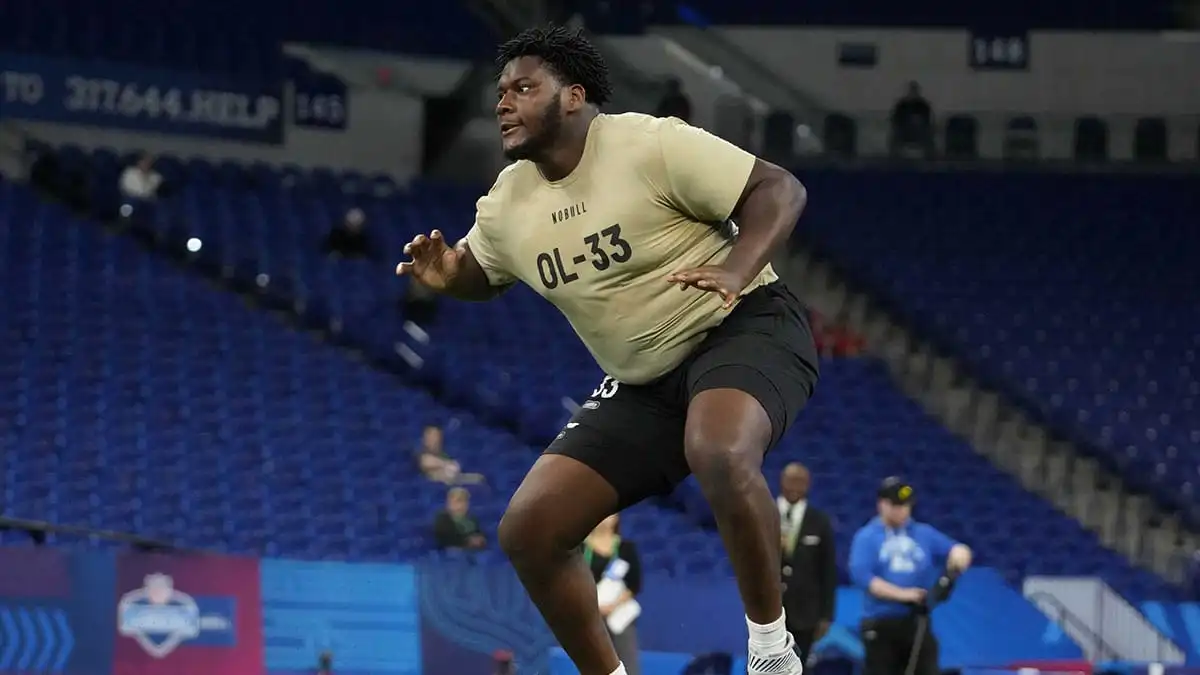
Seattle’s situation at right guard deserves attention as Anthony Bradford nears his return from injured reserve. Christian Haynes took advantage of Bradford’s absence, starting five straight games after an early season rotation. Beau Stephens also saw playing time at the position, giving Seattle plenty of options when their established starter returns. This competition creates a depth-chart scenario for Hortiz to monitor, as Haynes enters the NFL as a third-round selection in 2024 and, at just 26 years old, gives Los Angeles a younger interior option at a position that lacks stability. The Chargers’ Week 6 depth chart lists Kayode Awosika and Cole Strange at guard, but injuries have already necessitated adjustments to an offensive line that has struggled to find continuity.
Adding another developmental guard could give Harbaugh more flexibility without having to invest in an expensive veteran. Haynes’ experience in Seattle’s run-heavy scheme could align well with what Los Angeles aims to achieve in Hampton, and while McDaniel can create space through movement and formation, the Chargers need linemen who can make moves inside instead of relying solely on perimeter runs.
Seattle doesn’t have a compelling reason to part with valuable offensive line depth during a 3-3 season, so any discussions will depend largely on Bradford’s return and the Seahawks’ assessment of the right guard rotation afterward. A player returning to a reserve role may become more available, especially if another team is willing to offer a valuable draft pick in the future.
For Los Angeles, the appeal of getting someone young enough to compete for a starting role in the future, while also improving the overall performance of the current lineup, is significant.
The Chargers need a different kind of approach at the deadline
Los Angeles’ current record makes it difficult to support a typical opponent strategy. Trading premium picks for veterans nearing free agency will only deplete the resources available for an offseason that could bring about major roster changes.
A complete fire sale also has its drawbacks, as quarterback Justin Herbert is still under contract, rookie Hampton is just beginning his career, and several key defensive players are young enough to be part of the next competitive version of the team. Therefore, the trade deadline could serve as an opportunity to trade short-term assets for draft capital while also exploring players whose positions have become tight on their current teams.
General Manager Tom Hortiz has a few weeks to determine how aggressively the Chargers should reshape the roster, but an 0-5 start has reduced the incentive to pursue temporary fixes. Moves that add youth, contractual control, and competition for 2027 will give the franchise something more important than a desperate attempt to salvage a season that has already fallen apart.
The Los Angeles Chargers have emerged as one of the most intriguing teams to keep an eye on as the November 10 trade deadline approaches. Their 0-5 start has fueled speculation about Khalil Mack, whose expiring contract has made him appealing to contenders in need of pass-rush help.