The first month of the 2026 college football season is in the books. And as always, college football never disappoints. The first month was filled with plenty of surprises, crazy last-minute finishes, upsets, underachieving teams and programs on the rise already exceeding preseason expectations.
Which teams have improved their stock the most since the preseason? Florida and Oklahoma State entered the preseason as dark-horse candidates to finish in the top 25, and both teams exceeded most expectations with their September performance. The Gators picked up a huge victory over Ole Miss last Saturday, while the Cowboys picked off Oregon in Week 2.
Outside of Gainesville and Stillwater, the first month of the season saw Mississippi State’s rise behind quarterback Kamario Taylor, UCLA’s improvement under new coach Bob Chesney and UMass delivering a major turnaround with a 4-0 record.
With September’s games completed, Athlon Sports examines 10 teams on the rise after the first month of the season:
10 College Football Teams on the Rise After Week 4
Matt Pendleton – Imagn Images
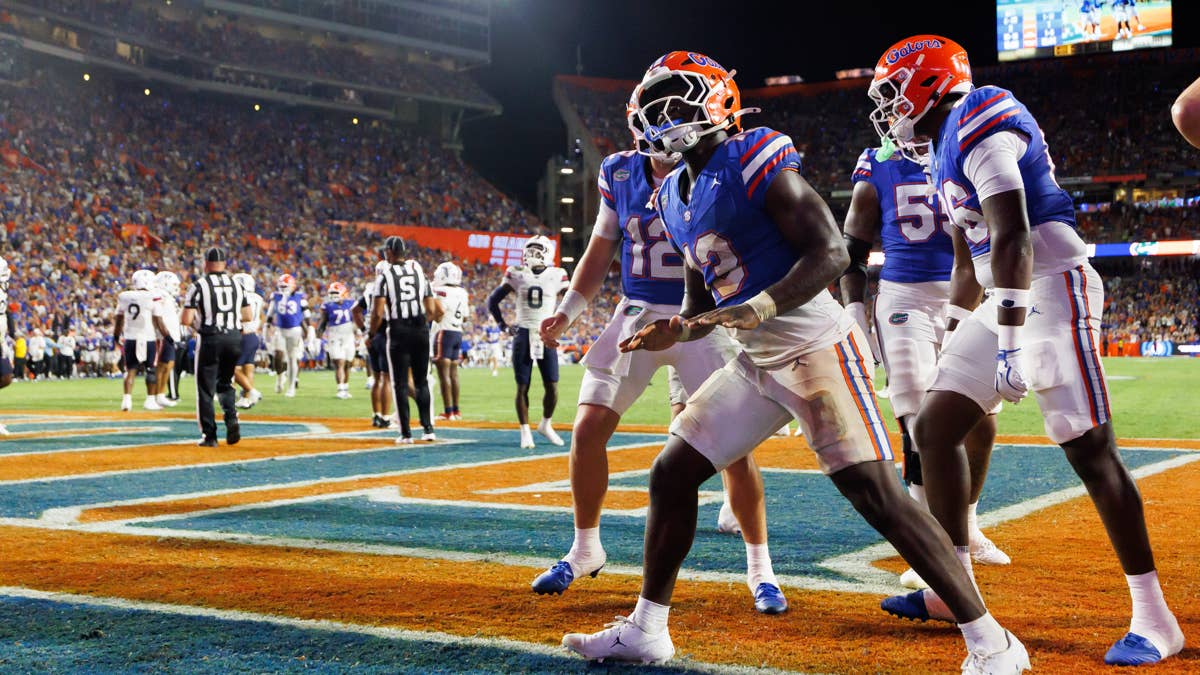
Florida
Florida hasn’t lacked for talent in recent years. However, former coach Billy Napier and his staff failed to maximize it. Just four games into the Jon Sumrall era, it’s clear those days are over in Gainesville. The Gators went from preseason dark horse to College Football Playoff contender in the span of four games, including a 44-39 win at Auburn and a 52-28 beatdown of Ole Miss.
Sumrall’s hire of Buster Faulkner as coordinator was widely regarded as one of the SEC’s top assistant moves this offseason. His arrival has already paid big-time dividends, as a prolific offense is largely behind the 4-0 start. Florida ranks second nationally in scoring (53.5 points per game) and eighth in yards per play (7.6). This unit features the punishing one-two punch of running backs Jadan Baugh and Duke Clark, with quarterback Aaron Philo among the nation’s most efficient passers through four games. Baugh ranks second nationally by averaging 150 rushing yards per contest and has recorded 41 broken tackles per Hudl IQ.
Florida’s defense is still a work in progress under Sumrall, but this unit has plenty of time to develop with how ultra productive the offense has been. The Gators rank 12th in the SEC in points allowed (22.8 per game) and surrender 5.02 yards per snap. Stopping the pass has been an issue at times, but edge Jayden Woods (four sacks) leads a developing pass rush that will take some of the pressure off the secondary.
Outside of games against Texas and Georgia later in October, Florida could be favored in all of its remaining contests.
Mississippi State
Behind star quarterback Kamario Taylor, the Bulldogs are 4-0 and on the rise in a breakout season in coach Jeff Lebby’s third year in charge. After crushing ULM 62-13, Mississippi State picked up quality wins over Minnesota (38-13), South Carolina (41-34) and Missouri (31-24). Up next is a massive showdown this Saturday against Alabama.
Taylor entered 2026 as a popular breakout candidate and has certainly lived up to the hype. Through four games, he’s passed for 1,192 yards and 14 touchdowns to just two picks and added 185 yards and a score on the ground. Taylor ranks sixth nationally in quarterback rating (187.78) and is tied for third with 53 completions of 10-plus yards. An improved offensive line has also paved the way for running back Fluff Bothwell to rush for 402 yards so far. Additionally, Taylor’s supporting cast includes a group of speedy receivers, headlined by Anthony Evans III (28 catches) and Sanfrisco Magee (five touchdown catches).
- Related: Alabama’s Keelon Russell and Mississippi State’s Kamario Taylor are Efficiency Monsters
With a high-powered offense in place, Mississippi State doesn’t need a shutdown defense to make a run in October. However, this unit is clearly improved after Lebby brought former head coach Zach Arnett back to Starkville. The Bulldogs are limiting teams to 4.96 yards per play (down from 5.96 in ‘25) and rank fifth in the SEC in third-down defense.
The upcoming slate is brutal. Mississippi State hosts Alabama, followed by games versus LSU (road), Oklahoma, Texas (road) and then Vanderbilt, Auburn and Ole Miss (road) to close out SEC play. However, with Taylor playing at a high level, this team has a chance to make plenty of noise the rest of the way.
© SARAH PHIPPS/THE OKLAHOMAN / USA TODAY NETWORK via Imagn Images
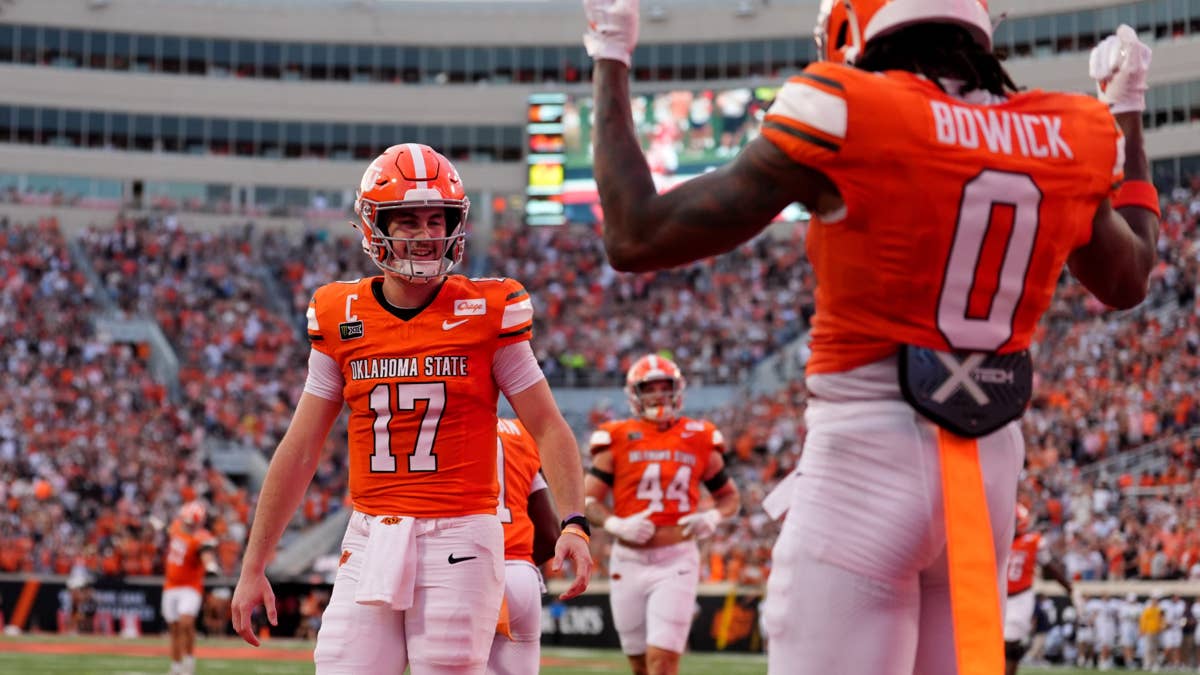
Oklahoma State
In the wide-open Big 12, an Oklahoma State team that made one of the offseason’s top coaching hires in Eric Morris and landed a trio of transfers in quarterback Drew Mestemaker, running back Caleb Hawkins and receiver Wyatt Young to headline a completely revamped roster, was easy to pencil in as a dark horse conference title contender.
A Week 1 loss to Tulsa temporarily derailed those preseason expectations, but the Cowboys have rebounded in a big way over the last three weeks. Behind Mestemaker, an offense averaging 37.3 points per game led the way in an upset over Oregon in Week 2, followed by victories against Murray State and West Virginia.
Oklahoma State’s defense might not be the best in the Big 12, but this unit is giving up only 5.1 yards per play through the first four games. And with the firepower on the offensive side, Morris doesn’t need this group to be elite. Instead, it just needs to excel at timely stops, takeaways, winning on third down and create a little havoc.
A Nov. 14 date against Texas Tech in Stillwater looms large for Big 12 title purposes, but the Cowboys also get Houston, Kansas State and Arizona State on the road this season.
UCLA
Behind a rushing attack that ranks fifth nationally in production (281.5 yards a game), and the leadership of new coach Bob Chesney, UCLA finished September with a 4-0 mark and has a schedule that could guide this team to playoff contention by November. Chesney was widely regarded as one of the top hires this offseason, but the 49-year-old coach has transformed this team faster than most anticipated.
Running back Wayne Knight followed Chesney from his old job at James Madison and leads the Big Ten by averaging 111.3 rushing yards a game this season. Quarterback Nico Iamaleava (205.0 yards per game) isn’t posting huge numbers, but he’s been solid under new coordinator Dean Kennedy. Through four games, UCLA has a 56.8% success rate on offense per Hudl IQ. Also, this unit leads the Big Ten with 15 plays of 30-plus yards.
Dramatic improvement is also the storyline on defense. After giving up 33.4 points per game last year, UCLA has cut that total to 18.8 per contest in ‘26. This unit is holding teams under 100 rushing yards per game and also ranks seventh in the Big Ten in third-down defense after finishing last in ‘25.
An Oct. 10 showdown against Oregon is a huge test for Chesney’s squad, but the rest of the schedule is manageable. Wisconsin, Michigan State, Nevada, Illinois and USC all come to the Rose Bowl, while Minnesota and Michigan are the only road trips outside of the Ducks.
Edward Finan – Imagn Images
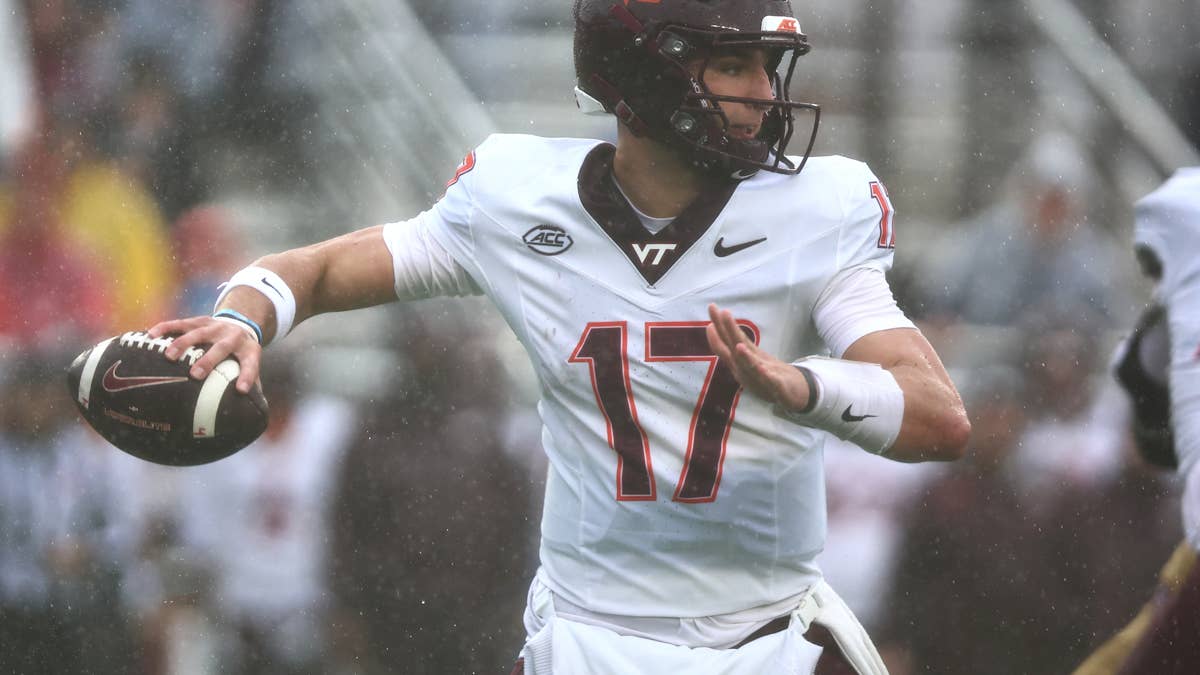
Virginia Tech
New coach James Franklin is already making an instant impact in Blacksburg. Virginia Tech is 4-0 for the first time since 2017, crushing VMI (73-3) and Old Dominion (44-21) to go with victories over Maryland (35-26) and Boston College (21-14).
Quarterback Ethan Grunkemeyer is one of the ACC’s rising stars, completing 74.3% of his passes for 1,012 yards and eight scores. Grunkemeyer and tight end Luke Reynolds (30 receptions in ‘26) followed Franklin from Penn State to Virginia Tech and are the key cogs in an attack averaging 43.3 points per game. Despite having to navigate some injuries along the offensive line, Franklin’s offense is still averaging 4.4 yards per carry and 177.8 yards a game on the ground.
The Hokies haven’t faced the toughest of offenses so far, but coordinator Brent Pry’s group is allowing just 4.6 yards per play and is giving up only 16 points per game. Behind Cortez Harris and Aycen Stevens, the Hokies also lead the ACC in sacks (17). Virginia Tech also ranks third in the ACC in third-down defense.
Outside of Miami, every team in the ACC has displayed major vulnerabilities. Virginia Tech is still evolving under Franklin, but if Grunkemeyer continues to develop, and the defense maintains its level of play, dates at Clemson (Oct. 24) and SMU (Nov. 6) could decide whether or not this team plays for the ACC title.
Kentucky
Kentucky’s hire of Will Stein was widely regarded as one of the best coaching moves of the offseason. Through four games, Stein has certainly delivered on that potential. En route to a 3-1 record, the Wildcats defeated Texas A&M (31-21) in College Station and took care of business in favorable matchups versus Youngstown State and South Alabama.
Stein’s track record of producing productive offenses has immediately translated to Lexington. After averaging 5.1 yards per play last season, Kentucky is averaging 6.8 yards per snap this fall. Quarterback Kenny Minchey (876 passing yards and eight scores) was a huge pickup from the transfer portal and sparked an improved passing game. A trio of pickups from the portal has also fueled improvement along the offensive line, leading the rushing attack to average 5.7 yards per snap.
- Related: New Crop of SEC Coaches Bring Energy and Experience — and They Promise Entertainment
Kentucky’s defense has room to grow after allowing 25 points per game through the first month of the season. However, with Stein’s ability to get the most out of the offense, this unit doesn’t need to be a shutdown group. The Wildcats are limiting big plays so far, surrendering just one snap of 40-plus yards.
A Week 5 showdown at South Carolina looms large, but Kentucky also has a massive measuring stick matchup coming the following week against LSU.
Sam Navarro-Imagn Images
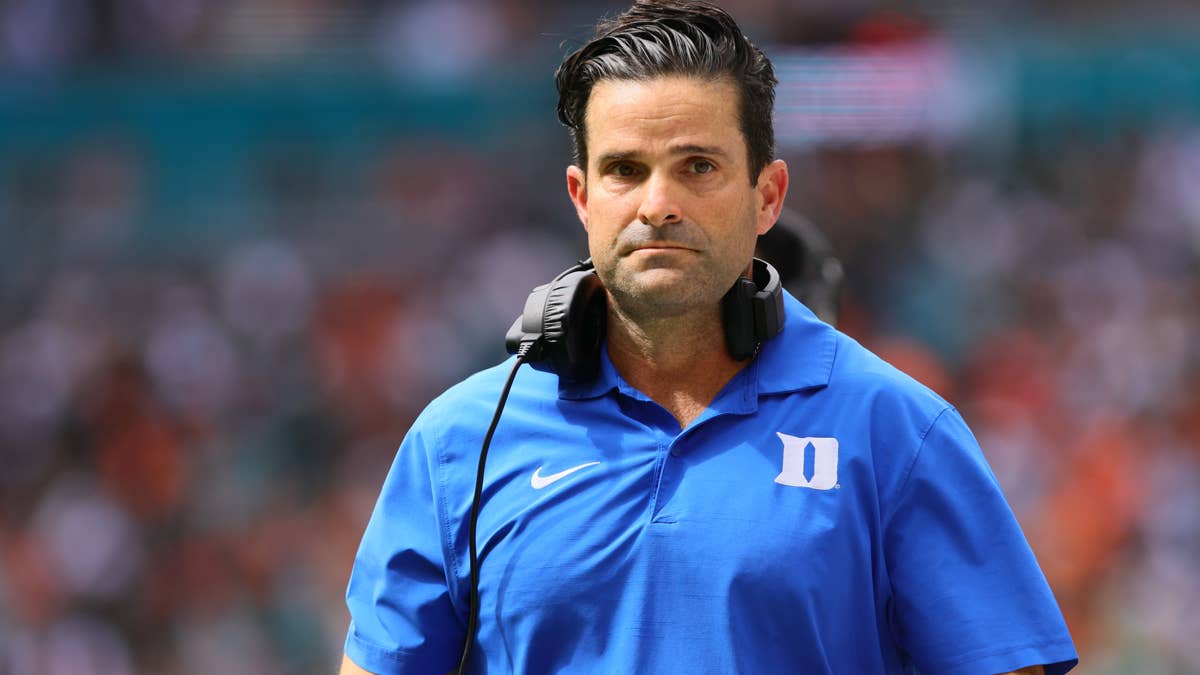
Duke
After winning the ACC title last season, Duke appeared to be among the early frontrunners once again in ‘26. However, quarterback Darian Mensah’s last-minute decision to transfer to Miami left a void on the Blue Devils’ roster. Despite that setback, coach Manny Diaz has continued to elevate this program, as Duke finished September with a 4-0 mark.
Running back Nate Sheppard (644 yards) is arguably among the nation’s most underrated players and is the engine behind an offense averaging 36.3 points per game. Veteran quarterback Walker Eget transferred from San Jose State to Durham this offseason and has been a steady presence, throwing for 721 yards and six scores.
Diaz’s defense allowed 29.4 points per game last year, but through the first month of the season, this unit could be among the most-improved groups in the ACC. Duke ranks third in the ACC in fewest points allowed per game (11.0) and is limiting teams to just 4.5 yards per play. The Blue Devils also rank third in sacks (11).
West Virginia
The Mountaineers fell short in last week’s Big 12 showdown against Oklahoma State (41-24). However, a 3-1 start is a good place for West Virginia to be, as coach Rich Rodriguez aims to deliver marked improvement in his second year back in charge. The Mountaineers knocked off Virginia in Charlotte (38-27) in Week 3, showcasing a team more equipped to push for a bowl trip after a 4-8 mark last year.
After averaging only 21.8 points per game in ‘25, WVU is averaging 36.3 through four games this fall. A pair of transfers in quarterback Michael Hawkins Jr. and running back Cam Cook have fueled that improvement, leading the offense to fourth nationally in rushing production per game.
West Virginia’s defense is likely to be a work in progress (6.3 yards per play allowed so far), but there’s no question this program is in overall better shape in Rodriguez’s second year and will be a tough out for the rest of the Big 12.
Vincent Carchietta-Imagn Images
UMass
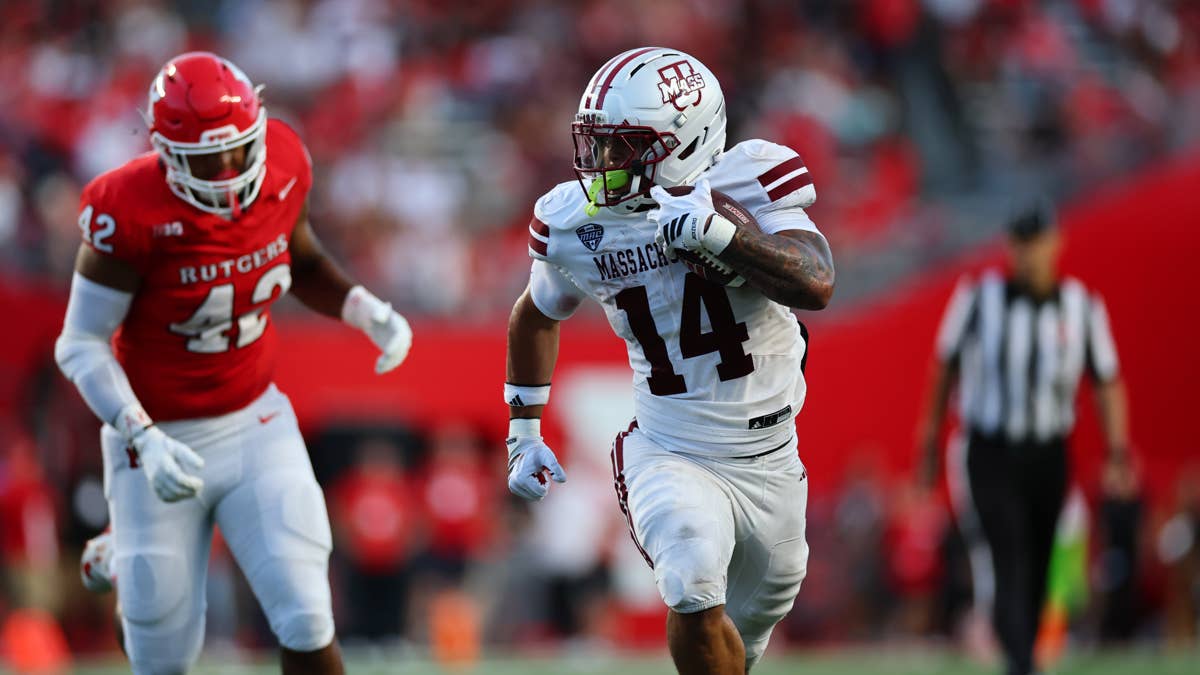
Coming off a 0-12 record and owning just seven victories since 2020, UMass was widely considered team No. 138 in preseason rankings. However, the Minutemen are drastically improved with a 4-0 start that included an upset of Rutgers (37-21) in Week 1 and a road victory at Sacramento State (35-6).
Quarterback Pop Watson III (191 total yards a game) is the catalyst behind an offense averaging 36.3 points a game — up from 11.1 per contest last year. Also, coach Joe Harasymiak’s defense ranks first in the MAC in fewest points allowed (12.8 per game allowed) and owns the conference lead in sacks generated (11).
Harasymiak inherited a program in need of major repair. However, thanks to his roster management and transfer acquisitions, UMass is a much-improved squad and poised to reach the postseason with just two more wins in ‘26.
North Dakota State
Considering its 10 FCS national titles, success at a high level is nothing new to North Dakota State. However, making the jump from FCS to FBS is no easy assignment. Yet, the Bison might be the favorite to win the Mountain West after the first month of the season — and perhaps a spot in the College Football Playoff.
A road victory at Air Force (38-32) was the headliner on a 4-0 start, with a familiar formula fueling North Dakota State in ‘26. The Bison average 158.8 rushing yards a contest behind a trio of talented running backs, and the defense is only giving up 4.4 yards per play. New quarterback Nathan Hayes (808 yards and seven touchdowns) has also been stellar in his first full year as the starter.
Road trips to UNLV (Oct. 10) and New Mexico (Oct. 24) could decide a spot in the Mountain West title game.
Related: 22 Undefeated College Football Teams Are Still Standing. When Will They Each Lose?
Related: College Football Bowl Projections for 2026-27
Related: 4 Winless College Football Teams Remain. When Will They Win a Game?